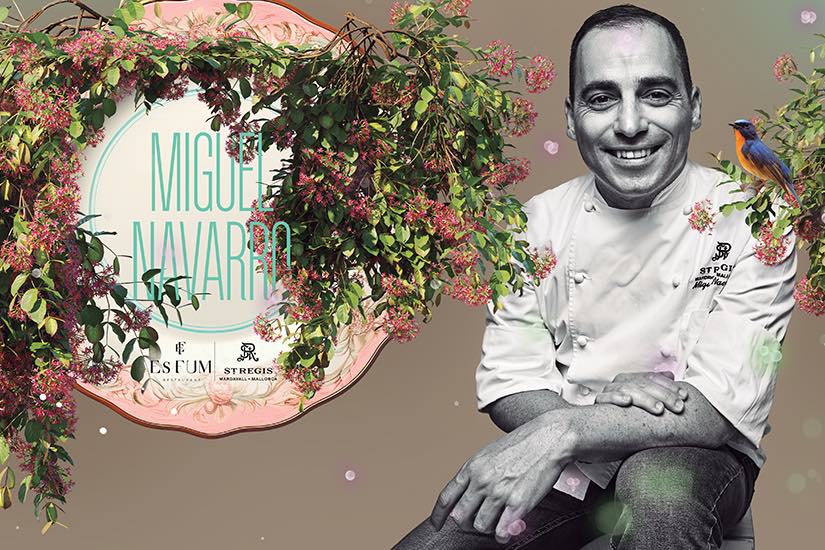
Miguel Navarro
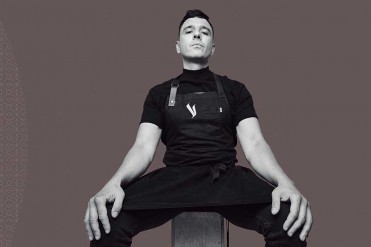
Time seems to stand still when you walk through the doors of the St. Regis Mardavall, but in the kitchens of its fine-dining restaurant, the clock moves at the speed of light. After nine seasons at the helm of Es Fum, La Gomera-born chef Miguel Navarro has decided that this summer, haute cuisine is getting up from its seat. Es Fum is launching its “Chef’s Garden” to shatter the static nature of the classic tasting menu and take diners on a journey through Asia and Latin America without letting go of local produce.
You’re an islander born and bred and have now spent nine seasons in Mallorca. Have you become a complete convert to Mallorcan cuisine, or do old habits die hard?
Ultimately, an islander always feels perfectly at ease on another island, and I’m very much at home here. But no, we don’t adhere to the strict concept of Mallorcan cuisine; at Es Fum, we create cuisine without borders. Every year, at the end of the season, I travel the world in search of flavours and combinations. We work with Mallorcan produce where possible, of course, but we don’t limit or pigeonhole ourselves.
All this sits under the imposing umbrella of the St. Regis Mardavall. You’ve spent 15 years with Marriott and are a self-confessed “hotel chef”. Have you never felt the itch to get out there and try your hand at a standalone restaurant?
Not really. Throughout my career I’ve worked on other parallel projects and explored other avenues, but ultimately, my base and the place where I truly enjoy creating this kind of cuisine is here. Es Fum already has its own identity and a very clear direction, but we’re part of the experience and luxury that a brand like St. Regis brings. In terms of service and the overall guest experience, it’s a tremendous support and a constant, vital source of learning.
Being in a luxury hotel sometimes requires you to be politically correct... This year, however, you’re bringing some major new developments. What revolution is brewing in the Es Fum kitchen?
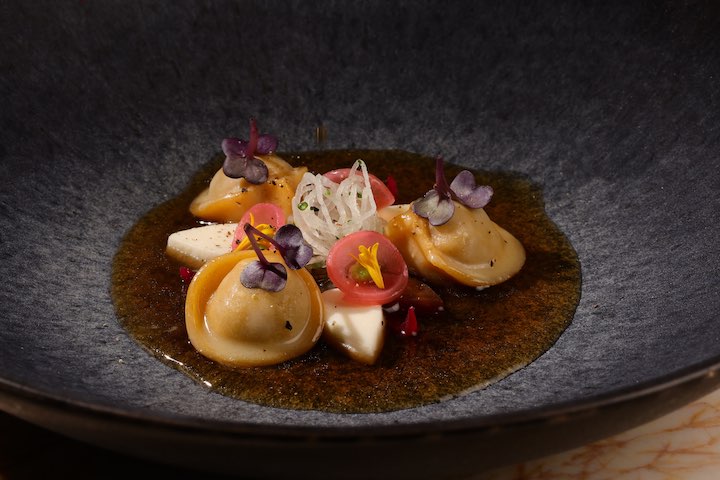
Yes, in a hotel you always have to cook to please everyone and you can’t pursue such a risky concept. But this is a controlled risk we’ve been rehearsing for three years, and I’ve said: I’m going to take the plunge. Of the three menus we had last year, we’re keeping the Recorrido menu and the Vegetal menu. The inspiration for Recorrido is rooted squarely in my travels through Asia and Latin America, on that tireless search for flavour, but always from the perspective of local produce. And we’re keeping the Vegetal menu because we want to be the go-to fine-dining restaurant for people who don’t eat animal protein.
At Es Fum, we create cuisine without borders
As well as what’s on the plate, you’re proposing a radical change in the way we eat…
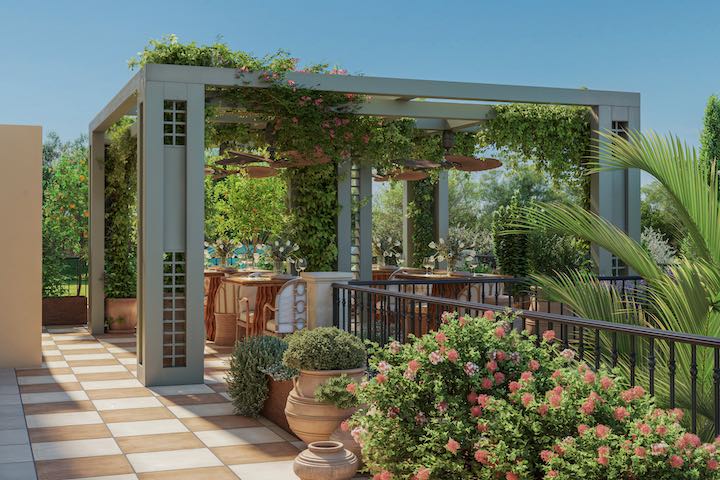
Totally. When people hear the words “tasting menu”, they say: “ugh, I’m going to be sitting there for three hours and I’ll leave feeling absolutely stuffed”. We want to challenge this perception, and to do so, we’ve created a more dynamic experience and a light, fresh cuisine, very much focused on the sea and vegetables. We want to get the diner moving around the restaurant. The idea is for them to make their way through the whole restaurant, interacting with trolleys in the dining room, for example... And this is where our big new feature for this summer comes in: we’re opening a new space: the Chef’s Garden.
And what exactly does the experience in that garden involve?
It’s an open-air space that’ll form part of the guest’s journey; the idea is that you start your dinner there. But, on top of that, we’re going to have four tables that can be pushed together. If a guest is looking for an exclusive space and wants to book the whole area for themselves, they can do so. It’s a total upgrade to the experience.
How do you shift the mindset of those high-end clients who book El Jardín, helping them realise that true exclusivity is no longer found in caviar?
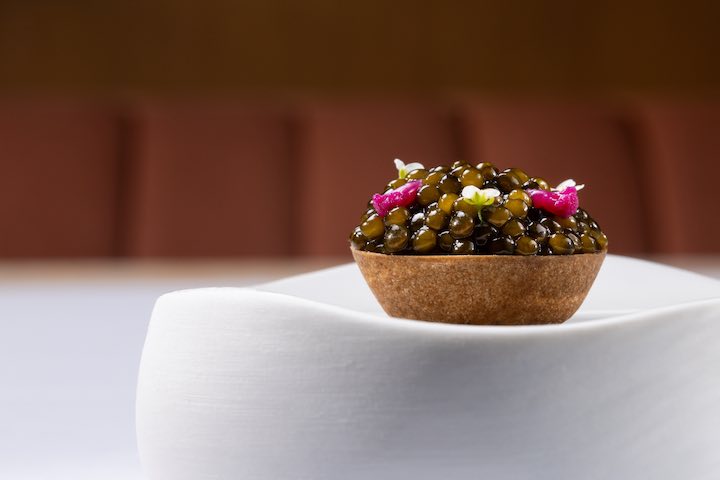
I think people already know what they’re coming for. We need to express our individuality; if we serve caviar, Wagyu beef and the same things everyone else serves, we’re losing our essence. The guest who visits this type of restaurant is looking for that identity they’d never find in New York. I prefer to highlight an olive oil from Mallorca, a cheese from Mahón or a mussel from Galicia. Sometimes, when we talk about “zero-kilometre” produce, we forget that Spain isn’t such a big country. The national scope gives us spectacular options without losing our sense of place.
To sustain this level of excellence, the team is essential. What are your challenges in dealing with the generational clash in haute cuisine?
The first step is to invest time in our teams. We need to train ourselves to improve the way we communicate and manage. Those of my generation come from a different era, from restaurants that weren’t always the easiest of environments, and fortunately, that has changed. There’s no longer any excuse for poor treatment. But to work at a high level, rigour, discipline and commitment are non-negotiable. There are many young people with a huge desire to learn; we just need to change the way we convey those high standards.
Es Fum has held its Michelin star since 2017. With so much change and evolution, is a second star on your mind?
Rather than obsessing over stars, you have to focus on ensuring the project continues to evolve and develop. If you stand still, you’ll disappear. Will another star come? That’s for others to decide. My job, and my sole aim, is for the project to keep growing and moving forward.