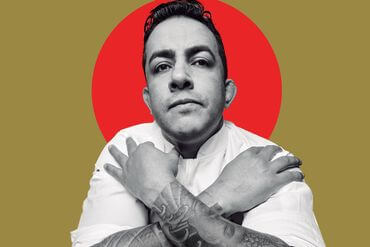
ANTÓNIO NOBRE, Degust’AR Lisboa. The guardian of the most authentic Alentejo flavours

António Nobre
António Nobre discovered his passion for cooking by chance while doing his military service in the Portuguese Navy. What began as a way to avoid less pleasant tasks became the driving force of his life, leading him to become one of the foremost exponents of Alentejo cuisine. From his homeland of Beja to his prominent role as chef at Degust’AR Lisboa Restaurant, Nobre combines tradition, innovation and a deep respect for local ingredients. In this interview, he reveals the secrets behind his career and his commitment to preserving and reimagining the authentic flavours of the Alentejo.
How did your passion for cooking begin?
My passion for cooking started in a rather unexpected way during my compulsory military service in the Portuguese Navy. To avoid some of the less pleasant tasks, like sweeping up cigarette butts or doing night shifts, I decided to enrol in a cookery course. Little did I know that what seemed like a casual decision at the time would turn into a deep passion and set the direction for my career.
What memories do you have of learning to cook from your mother and grandmother?
Some of my fondest memories are of the wonderful smells that would fill the house at sunrise, bringing with them a sense of comfort and the flavours of unforgettable moments. Those days taught me simple yet invaluable lessons, like using dried herbs to enhance flavour as they’re more concentrated than fresh herbs, and they’ve remained a cornerstone of my cooking ever since.
How has your hometown, Beja, shaped the way you think about cooking?
Beja, and the Alentejo region as a whole, has had a profound impact on how I approach cooking. Growing up, I was surrounded by the region’s iconic flavours—olive oil, bread, pork, cured meats, and aromatic herbs. It taught me to appreciate the simplicity and authenticity of local ingredients. This cultural heritage shaped my belief that good cooking is rooted in respecting ingredients and their history, while preserving and reinterpreting the flavours of Alentejo.
What inspired you to specialise in Alentejo cuisine, and what does it mean to you to champion its flavours?
Alentejo cuisine has always been part of my life. From my very first cookery course, my passion for it only grew. I started devouring books, studying, and speaking to older people in the villages and hamlets of Alentejo, who held so much valuable traditional knowledge. I threw myself into learning everything I could, guided by incredible mentors like the Fialho brothers, Maria Antónia Goes, and Maria de Lourdes Modesto. Today, as a member of the Confraria Gastronómica do Alentejo (the Alentejo Gastronomic Brotherhood) and the Scientific Council of the Alentejo Gastronomic Charter, I feel a huge responsibility to protect and celebrate these authentic flavours.

About your vision of cooking
How would you describe the essence of Alentejo cuisine to someone who has never tried it?
Alentejo cuisine is all about celebrating rich, bold flavours in a way that’s simple yet unforgettable. Even people who think they don’t like coriander or aromatic herbs often find themselves converted after trying it. The dishes may be simple in preparation, but they’re packed with flavour, and there’s something about them that captures everyone’s heart.
How important are local ingredients, like Alentejo bread, aromatic herbs, and olive oil, in your creations?
Without Alentejo bread, herbs like coriander, pennyroyal, and river mint as well as olive oil, and garlic, I wouldn’t be the chef I am today. These ingredients are fundamental to Alentejo cuisine and form the backbone of my dishes, giving them authenticity and a depth of flavour that’s impossible to replicate otherwise.
How do you balance tradition with innovation in your dishes?
I believe tradition and innovation always go hand in hand. To innovate, you have to understand and respect tradition—it’s the foundation from which you can create something new and authentic. When I reinvent a dish, I always keep the essence of the traditional recipe intact, creatively adapting it without taking away its identity. That balance is what guides me in creating my dishes.
What’s your philosophy when creating a menu or a dish?
I approach cooking much like philosophy: it’s a constant quest for balance. I start by thinking about what will appeal to my clients and what they will enjoy. From there, I experiment with aromas, flavours, and textures, always aiming to create harmony between them. I also make sure to respect culinary tradition, ensuring that the dishes I create remain authentic, but with an innovative twist.
About Restaurante Degust’AR Lisboa
What inspired you to bring Alentejo cuisine to Lisbon?
My desire to share the authentic flavours of my homeland with Lisbon is what inspired me to bring Alentejo cuisine to the capital. The cuisine of the Alentejo is rich in history, tradition, and unique flavours, and I believe it deserves greater recognition and appreciation beyond the region itself. Joining the M'AR De AR Group provided the perfect opportunity to promote our cuisine, blending tradition with a contemporary touch in an environment that values authenticity.
What’s the biggest challenge in adapting Alentejo cuisine for a broader and more diverse clientele in Lisbon?
The biggest challenge is finding the balance between preserving the authenticity of traditional flavours and meeting the expectations of a cosmopolitan and discerning clientele. Alentejo cuisine is simple but bold, with intense and striking flavours like olive oil and bread. When bringing it to Lisbon, we sometimes need to adapt certain dishes to make them more accessible, but without compromising their essence.

What sets the gastronomic experience at Restaurante Degust’AR Lisboa apart?
The experience at Degust’AR Lisboa stands out for its blend of traditional Alentejo cuisine with a contemporary and creative approach. We serve authentic dishes made with fresh, local ingredients in a sophisticated yet welcoming setting. The presentation of the dishes, paired with wines from the region, turns each meal into a full sensory journey. Our excellent service further enhances the experience, making it truly unforgettable.
How do you choose the ingredients for the restaurant’s menu?
We work with top-quality ingredients sourced directly from the Alentejo, such as fresh bread, meats, cured sausages, olive oil, and certain vegetables. This close connection to our homeland ensures the authenticity and quality of our dishes. We’re also fortunate to work with Mercado 31 de Janeiro, which supplies us with high-quality fresh fish and additional vegetables, allowing us to complement our menu with carefully selected fresh produce.
Which dish from the menu would you recommend to someone who wants to experience the true essence of the Alentejo?
I would recommend the sopa de cação, pork cheeks, and asparagus migas with pork tenderloins. These dishes truly represent the essence of Alentejo cuisine.
About your career and personal vision
What has been the most memorable moment of your career so far?
The most memorable moment of my career was when Maria de Lourdes Modesto praised my sopa de cação, and her comments were shared on social media. Receiving such recognition from a leading figure in Alentejo cuisine was a huge honour.
How has your cooking evolved since the start of your career to today?
The evolution of my cooking has been the result of continuous study, learning from other professionals, and an ongoing curiosity. Every experience and every dish I create has contributed to my growth as a chef.
What advice would you give to young people who want to pursue a career in gastronomy?
The most important thing is to have a genuine passion for cooking, along with humility, a strong work ethic, and the willingness to make sacrifices. In gastronomy, there are no holidays or days off. Dedication and consistent effort are essential to grow and evolve in this profession.
How do you define success as a chef?
For me, success is the result of persistent hard work, humility, and honesty. Constant dedication, a commitment to quality, and integrity in relationships are the pillars of a strong career and continuous growth.

Curiosities and anecdotes
Do you have any special ritual or habit before you start cooking?
I don’t have a specific ritual, but I always begin my work in a focused and organised way.
Have you ever had an unforgettable experience with a client who tasted your food?
Yes, I’ve had several unforgettable experiences where clients were amazed by the flavours of my cooking and the authenticity of the dishes.
What’s your favourite Alentejo dish, both to cook and to eat?
Açorda de bacalhau à alentejana is my favourite dish. It perfectly reflects the simplicity and depth of this unique cuisine.
The future and upcoming projects
What projects or goals do you have for the future of Alentejo cuisine?
I’m planning to publish a new cookbook that brings together recipes from chefs working across the Alentejo. The aim is to preserve and further promote this rich culinary tradition.
How would you like the legacy of Restaurante Degust’AR Lisboa to be remembered?
I’d like to be remembered as a chef who was a guardian of Alentejo cuisine, someone who preserved and celebrated the authentic flavours of this region.
Would you like to explore other regions of Portugal or even take Alentejo cuisine abroad?
It’s every chef’s dream to expand their horizons. I’ve already had the opportunity to bring Alentejo cuisine to other parts of the country, including the islands, and even to some countries in Europe. The response is always one of surprise and admiration for the unique flavours of our gastronomy.