Balfegó
In the ocean, there’s no such thing as waste, only treasures waiting to be discovered. The Balfegó family brings this unyielding law of nature to haute cuisine, mapping out the anatomy of the bluefin tuna to present us with more than 20 exceptional cuts. A masterclass in the circular economy that crowns this fish as the undisputed “Iberian of the sea”.
The wise folk of the countryside say that we like every part of the pig, “right down to its gait”. In the vast blue of our coastline, adapting this ancient popular saying was a historical debt that the Balfegó family has masterfully settled: “from the bluefin tuna, right down to its every movement”. And with good reason. This majestic marine giant has even been christened “the Iberian of the sea”, a label it has earned not only for its seductive marbling of fat, but also for the extent to which every part of the fish is utilised.
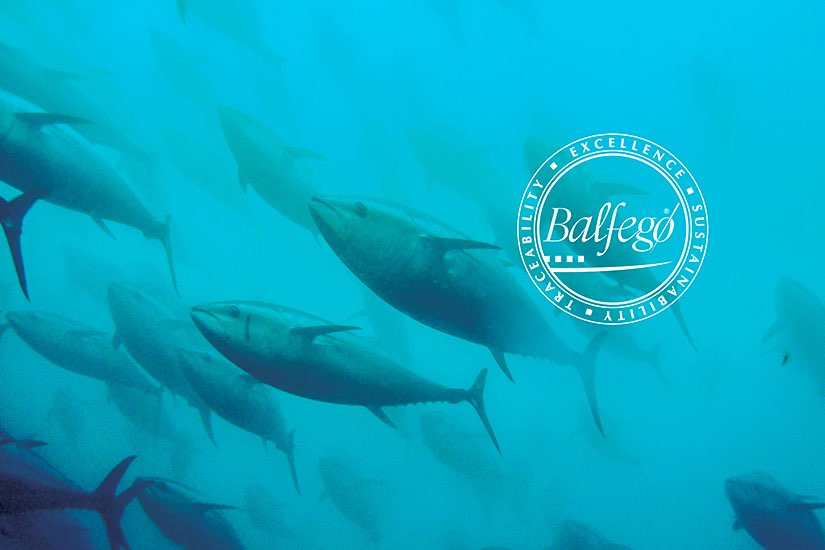
In L’Ametlla de Mar, Tarragona, the fifth generation of this line of fishermen has transformed tradition into the absolute cutting edge of sustainability. Their wild tuna live in pools off the coast and are fed exclusively on oily fish, in keeping with their natural diet. This isn’t merely a marketing gimmick; Balfegó is a pioneer in the sector in achieving the demanding B Corp certification, guaranteeing an impeccable environmental and social impact. But how does this ethos translate directly onto the plate? Through a perfect circular economy: the marketing of more than twenty different cuts of tuna.
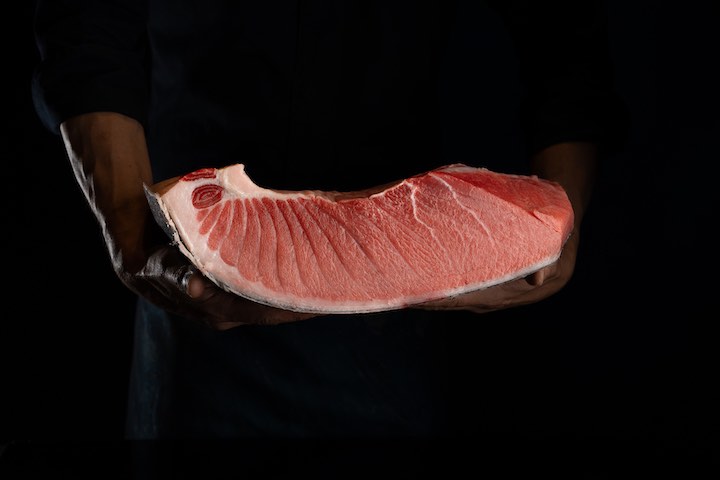
Anatomy of Balfegó tuna
We have all sighed at some point at the extreme melt-in-the-mouth texture of a ventresca, or tuna belly, (the part with the highest omega-3 content, an icon of authentic bluefin tuna and the ultimate expression of sushi) or at the balance of a fine loin, with that captivating colour contrast between the lean akami and the chutoro. These are the prized cuts, acclaimed worldwide. But the unanimous plaudits in haute cuisine are now being won by those cuts that have been waiting patiently behind the scenes of the tuna’s anatomy.
Think of the parpatana. Known among foodies as the “entrecôte of the sea”, this bone from the sides of the neck offers intensely red lean meat alongside a succulent part of the ventresca. When deeply chargrilled over open flames, it becomes an incredibly juicy spectacle on the inside. Or the fascinating harmonica cut, with its marbled meat. After being patiently deboned at 65 degrees in an aromatic broth, it reveals a deeply meaty flavour reminiscent of veal. The morrillo cut is another culinary gem; with a fat content similar to that of the ventresca, it demands inventive cooking techniques, such as acidic elements, marinades or a vibrant passion fruit cream, to balance its intoxicating grilled texture.
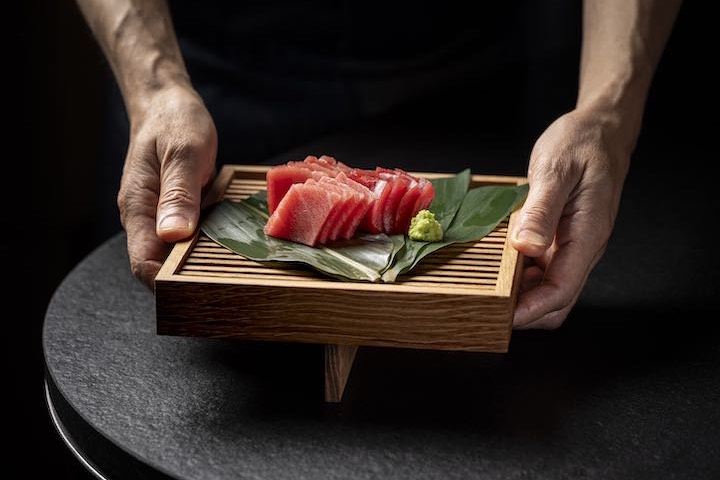
The revolution in seafood offal
Seafood offal has ceased to be a taboo and has become the battle cry of haute cuisine. The tripe, which comes from the animal’s rough stomach, is reclaiming its throne as the “tripe of the sea”, a perfect dish for winter days which warms the soul when well boiled and stewed with potatoes. The heart, a cult ingredient in new-wave gastronomy, requires long cooking times and offers unrivalled intensity when cured in salt or simmered over a low heat.
The tuna eye, an ingredient long revered by cutting-edge Asian cuisine, is prized for its muscle and connective tissue due to its high protein and collagen content. And what about the ear? Located in the operculum area, it offers a delicate taste of the sea and a fibrous, gelatinous texture that rivals the equivalent parts of the pig.
The contemporary gastronomic history of Spain would be incomprehensible without spine. Ferran Adrià, at his legendary elBulli, first used this “false marrow” or synovial fluid in 2003; with its subtle flavour, it’s ideal for eating raw, coating in batter, frying or serving as tempura. And for the real foodies, the delicate meat from the spine (nakaochi), produced in limited quantities, is the star ingredient to top off a world-class ceviche.
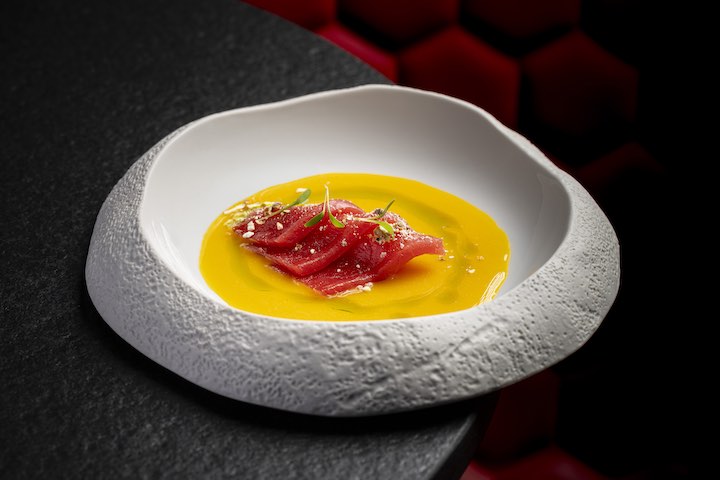
From the galete cut, which serves as a silky kokotxa, or fish throat, full of gelatine, ideal for rice dishes and stews, to the fibrous cheek (ideal for slow cooking). We can’t overlook the impressive osso buco, a cut that uniquely combines crispy skin and succulent meat. The secreto cut shines in raw nigiris thanks to its intense flavour, while the sangacho, the muscle attached to the spine, boasts the highest selenium content of any known food. Even the tip of the loin, so often overlooked in the classic cut, proves to be a star ingredient due to its versatility in onion-based stews or burgers.
Balfegó’s commitment to excellence begins with harvesting the animal on demand, at its optimal fat content, using the Japanese ikejime technique, which guarantees the complete absence of stress and suffering. From that point onwards, every last ounce of the product is put to use. Each portion arrives at the restaurant accompanied by a QR code that provides a fully transparent account of that tuna’s life. Honouring the sustainability of the sea by making the most of every millimetre of this colossal creature is the most complete, logical and exquisite experience we can bring to the table.