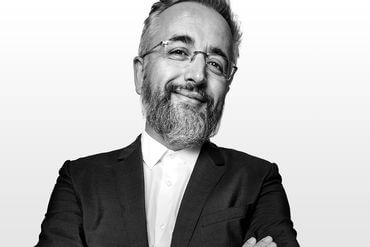
Diogo Formiga
Behind the unique experience offered by Encanto, the Michelin-starred vegetarian restaurant headed by José Avillez, is the restless and creative mind of Diogo Formiga, its head chef. With a background in marine biology, the chef combines science and culinary techniques to make vegetables the true stars of Portuguese haute cuisine.
In his day-to-day cooking, Formiga’s cuisine reflects the essence of Encanto: sustainability, seasonality and an obsession with making the most of natural resources. Discreet and deeply analytical, the chef has found in vegetarian gastronomy a way to explore his passion for nature and connect with small producers who share his vision. “I’m set in my ways in the kitchen, but easy-going outside of it”, he admits. Under his leadership, the restaurant Encanto inspires a change in the way we think about and value our food. In every dish, Formiga turns vegetables into magic, making Encanto a true homage to the planet.
How did your passion for cooking begin?
My relationship with cooking started 12 years ago. Before that I studied biology and worked in an office for a year, but I wasn’t happy, I was going crazy. I decided to change my life and do something I was really passionate about. I had always liked cooking for my family and friends, so I gave it a try. I started working in a restaurant in Porto, and from the first day I knew that this was what I wanted to do. It was like a spark was lit. Although gastronomy was not part of my initial plans, in the end I think it was always there, hidden, waiting for the right moment.
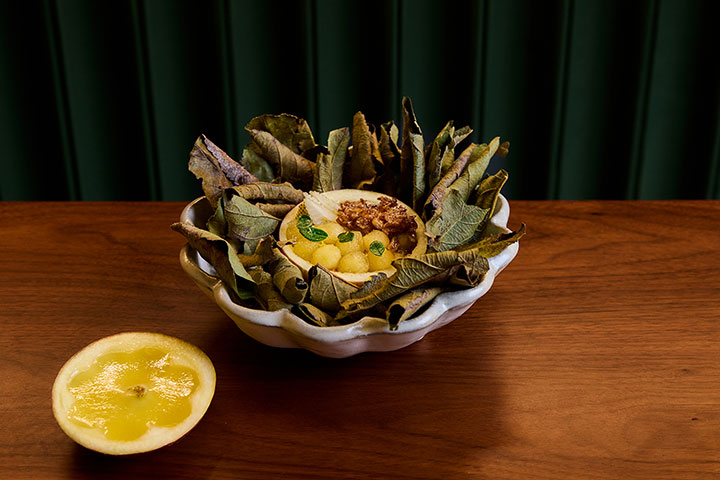
Apple, chestnut and wild mushrooms
How did you transition to vegetarian cuisine?
It was a very natural process. I was never solely focused on vegetables, but when the opportunity arose to join the Encanto team, I knew it was a unique challenge. I was working at Belcanto when José Avillez approached me to lead Encanto. I was attracted to the idea of cooking without meat and fish, because it was more complicated and therefore more fun. At first, we even thought of using some animal-derived ingredients in the broths, such as mussel soup, but we soon realised that we could achieve the intensity of flavour we were looking for with vegetables alone. The decision to go 100 per cent vegetarian came almost immediately and established the spirit of the restaurant.
What sets Encanto apart from other vegetarian restaurants?
I think Encanto celebrates vegetables with a very scientific and creative approach. We don’t just use the fruit of a plant, but also its leaves, roots, flowers and any part that is edible. Our goal is to reveal to the customer the hidden potential of each ingredient.
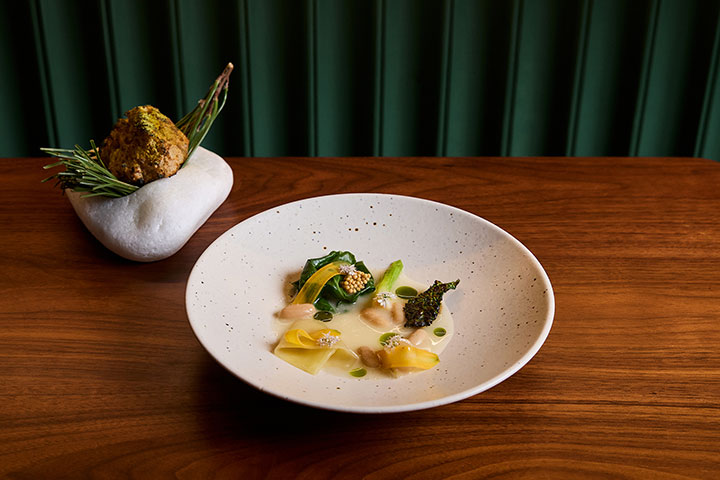
Autumn vegetables stew
Our food is completely seasonal, which requires a lot of planning and research. For example, peas are only available for one month. If we don’t have a dish ready for that time, we simply don’t serve them. This level of detail and respect for produce is one of our hallmarks. We also work hand in hand with small local producers who share our passion. I call them personally every day to plan the following season together. It takes a lot of effort but is essential to guarantee the quality and sustainability of what we do.
Encanto celebrates vegetables with a very scientific and creative approach
How do you manage sustainability at Encanto?
Sustainability is a top priority. At Encanto we do not use plastic, vacuum bags or film. Our oil arrives in drums that we return to the supplier for reuse. Everything is designed to minimise our environmental footprint. We also maintain a close relationship with producers, which allows us to avoid waste and to follow traditional and responsible practices. For example, we collaborate with an artisanal salt producer in the Algarve, who works alone with his daughter. Such partnerships reflect our commitment to sustainability and respect for resources. On the other hand, Encanto also acts as a laboratory for the José Avillez Group. The solutions we implement here are studied for application in the group’s other restaurants. It is a way to go that extra bit further and have a positive impact on our entire structure.

Dinning room
What did the Michelin star you got in Encanto’s first year mean to you?
It was incredible. It was not something I expected. However, when it happened, we were extremely pleased. I remember how, during the gala, I didn’t want to go on stage because I don’t like being the centre of attention, but José Avillez insisted and pushed me to do it. It was an unforgettable moment, but the next day we were back in the kitchen, working with more motivation than ever. The star is wonderful, but the most important thing is still the opinion of our customers.
How do you picture Encanto’s future?
I imagine Encanto becoming more and more connected with nature. We're even going to set up Encanto's first pop-up in Casa Nossa. It will be very important for us to be able to do what we do in a rural context and deepen the team's connection with nature. I imagine an Encanto that increasingly combines scientific research with cooking in order to close the sustainability loop. That would be a dream come true. It's extremely difficult, but challenging and exciting at the same time, to find sustainable solutions in the middle of the city.
We continue to evolve and convey our message through creativity: vegetables can be the protagonists of the kitchen, and their potential is infinite.