Mark Vaessen & Aleksandar Todorov - OKU Ibiza. TEYO, the Japanese-inspired restaurant
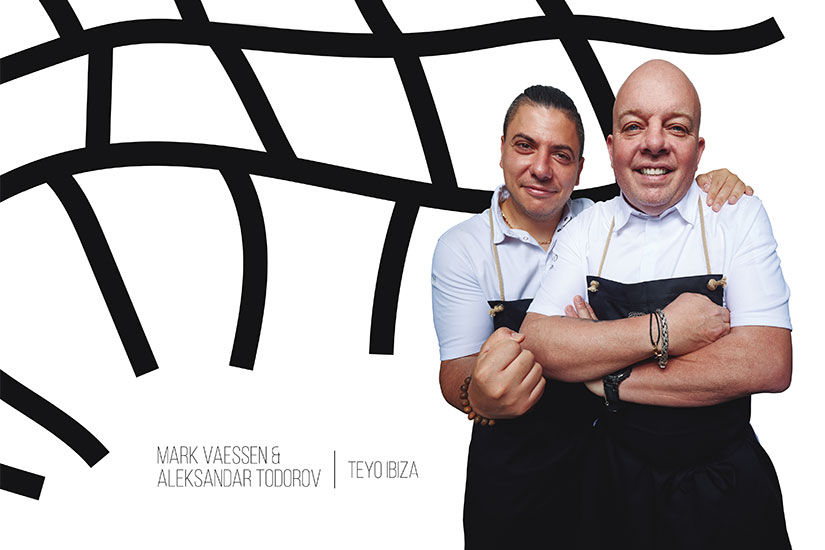
Mark Vaessen & Aleksandar Todorov
With the growth of the OKU group and the opening of new hotels in destinations such as Bodrum (Turkey) and Andalusia, the OKU Ibiza restaurant is transforming this season into TEYO: an independent concept with a culinary proposal that combines Japanese technique with local ingredients and a contemporary vision of gastronomic fusion. We spoke to Mark Vaessen, the group's executive chef, and Aleksandar Todorov, head chef, about this new phase, their gastronomic evolution and the balance between precision, freedom and taste.
Mark, last year we talked about OKU's culinary proposal. This summer, the restaurant will have a new name: Teyo. What prompted this change?
-Mark Vaessen: The timing was right. OKU is no longer just a hotel with a restaurant; it is a group that is growing, with new openings in places such as Turkey and Andalusia. We felt that the restaurant should have its own identity. Our concept has evolved: we remain faithful to our Japanese roots, but with a freer and more natural and sustainable approach.
Is Teyo a break with the past or a continuation?
-Mark: It's an evolution. We're keeping some iconic dishes, while adding new proposals. Our approach is more mature and more conscious. We've learned a lot in these five years and you can see this in our menu and technique and how we understand cooking.
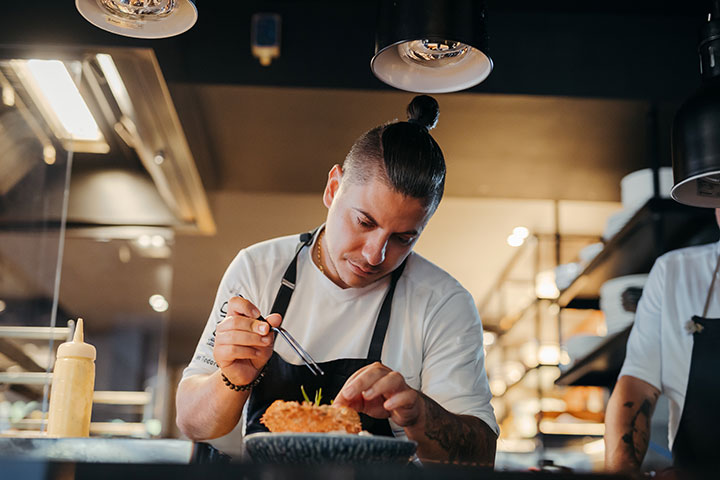
Aleksandar Todorov
Aleksandar, you're in charge of Teyo and Oku Ibiza's cuisine on a daily basis. How do you handle this responsibility?
-Aleksandar Todorov: I enjoy it. I've been working with Mark for eight years, and I think we have a very strong connection. He is more focused on the group's overall vision, so here I have room to be the leader. I like making decisions and organising the team but, above all, I want to continue cooking. This project lets me grow without losing our essence.
How would you define Teyo's cuisine?
-Aleksandar: It's Japanese cuisine at its core, but with a travelling spirit. We use traditional techniques such as robata, tempura, sushi and sashimi but the ingredients can come from anywhere, as long as they are excellent. We like to call it "global Nikkei" although our vision of Nikkei is not typical.
-Mark: Exactly. For us, Nikkei is not synonymous with Peru. It is a broader concept. A Japanese person who emigrates to Spain, Thailand or Bulgaria will cook with what is at hand. We do the same: we apply Japanese techniques to local products. For example, we have a fried egg-and-potato dish with tuna tartar and caviar that perfectly defines our approach: it's Nikkei, but Japanese-Spanish.
What role do local ingredients play in your cuisine?
-Mark: They are fundamental. They inspire us. In Ibiza, red shrimps are a treasure but they are sometimes hard to come by. We also love wild fennel, almond blossom, etc. We adapt to the environment and celebrate this.
-Aleksandar: And always with the best quality. We make no compromises when it comes to the product. If we buy tuna, it must be the best. If we work with wagyu, it must be of top quality. Our obsession with the perfect ingredient is part of our philosophy.
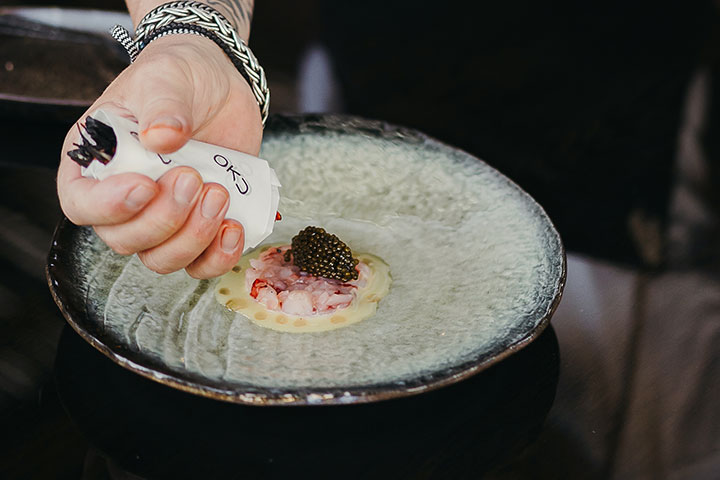
Gambero rojo tartare
What type of dining experience do you want to offer at Teyo?
-Mark: Dynamic, vibrant and smooth. We don't want traditional fine dining. Ibiza is not an island of silence and protocol; it is energy, music and connection. At Teyo, we have a DJ, the food flows and the service is pleasant and friendly. We want people to talk, share and enjoy.
-Aleksandar: We have a tasting menu, but it's not conventional at all. We serve it in two-course dishes to share. We don't want each diner to be focused only on their dish, we want them to live a collective experience. This is part of Teyo's soul.
And how does an international audience react to such a sharing proposition?
-Mark: At first, there was some resistance. But now people understand and enjoy it. Sharing brings people together and generates conversation. And what's more, in Japan food is also shared: sushi, tempura, robata, etc., it's not just a Spanish thing.
Technically, what sets TEYO apart?
-Aleksandar: The precision of Japanese techniques. From the robata to the cutting of a simple spring onion, everything has its precision. We have both travelled to Japan and worked there. Even the way you cut the negi for the ramen in Japan says a lot about the restaurant's standard. And that attention to detail is what we are passionate about.
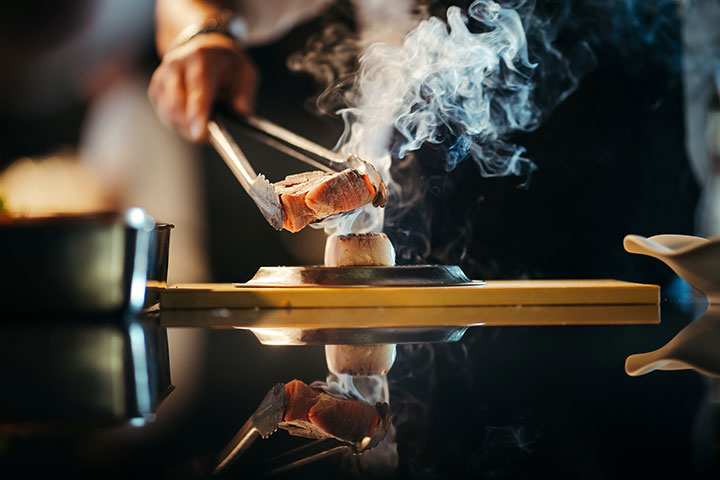
Tiradito Hamachi
Ibiza is now an island with a very competitive culinary scene. What does Teyo bring to the local scene?
-Mark: We don't want to do 400 services per night like other big names. We prefer fewer tables, more dedication and more soul. At Teyo, there is passion plus freedom to change and improve. Every season we adjust and fine-tune. And that's not easy to find at restaurants that belong to large chains.
-Aleksandar: The difference is our freedom. Here we can experiment, listen to our team and grow with the diners. That flexibility is priceless.
What excites you most about this new phase?
-Mark: See how the team grows and how a new identity takes shape.
-Aleksandar: And continue cooking with freedom and excellence plus sharing the same vision.